Risky Business: Why Risk Management Matters

The truth is: People, policies, and leadership decisions quietly shape your biggest risks.
When small businesses hear the phrase risk management, many immediately think of insurance policies, compliance requirements, or messy legal battles. While those risks are real, they’re no longer the most common or even the most damaging. In today’s workplace, the greatest risks are often human, subtle, and quietly compounding.
Miscommunication, unclear expectations, inconsistent leadership decisions, burnout, and outdated policies applied to modern work realities all create greater exposure to risks with real impacts on businesses. These issues rarely erupt overnight. They build gradually through everyday moments, eroding trust and performance long before a formal problem ever appears. Modern risk management isn’t about fear or control, it’s about foresight. ConsciousHR is your partner in solving for, and navigating risk, long before lawyers are ever needed.
The nature of risk has changed, even if many organizational systems haven’t. Historically, risk management focused on preventing visible, high-impact events like safety incidents or compliance violations. While those still matter, today’s workplaces face a new category of people-related risk that is harder to see and easier to ignore. Things like: Breakdowns in psychological safety, unclear communication during periods of change, manager inconsistency, and burnout-driven disengagement. These are now among the most common threats to stability.
The Impact of Poor Risk Management
Small businesses feel these risks more quickly because of their size. Think of it like dropping a rock into a lake versus a small fish pond - both make circles but the effects on the ecosystems are not equal. With fewer layers and closer working relationships in smaller businesses, issues surface faster and feel more personal (and immediate).. Many small organizations rely on informal processes that work well in the early stages but create risk as teams grow. Decisions live in people’s heads instead of being documented, policies are applied inconsistently to preserve flexibility, and difficult conversations are sometimes avoided to keep the peace. Over time, flexibility without structure becomes unpredictability and unpredictability is a risk.
At its core, risk management is really about clarity. When people understand what’s expected of them, how decisions are made, and where to go with concerns, issues are less likely to fester and escalate. When expectations are unclear or inconsistently applied, confusion fills the gap and confusion is where risk thrives. Clarity reduces misinterpretation, consistency builds trust, and trust lowers the emotional and operational cost of conflict.
The impact of unmanaged people risk shows up on a balance sheet and it’s felt every day. Leaders spend time untangling preventable issues. Managers experience decision fatigue and stress. Employees disengage or quietly look for their next role - remember “quiet quitting”? By the time an issue becomes “serious,” the root cause has often been present for months, if not years.
Modern Risk Management
Modern risk management looks different than it used to. It’s not about adding bureaucracy or rigid controls. It’s about building intentional systems that support people while protecting the business. This includes clear communication norms, defined roles and decision-making authority, consistent feedback and performance processes, and policies that are documented but still human-centered. It also means treating psychological safety as a measurable priority and equipping managers to address conflict early rather than reactively.
In 2026, risk management must be a leadership skill. Strong leaders understand that how they communicate, respond to challenges, and model behavior directly impacts organizational risk. They address issues early, communicate decisions transparently, balance empathy with accountability, and create space for feedback without fear. When leaders are equipped to manage people-related risk, HR becomes a strategic partner instead of a last-minute safety net (don’t worry for the big oopsies, we still got you!).
The bottom line is simple: risk management isn’t about preparing for disaster; it’s about preventing unnecessary disruption. For small businesses, the greatest risks are often internal, subtle, and unspoken. But when organizations invest in clarity, communication, and trust, those risks become manageable and manageable risk leads to resilient teams, confident leaders, and businesses built to last.
Because the smartest, most successful businesses don’t avoid risk. They understand it.
Free Resource: Conscious HR Risk Management Audit
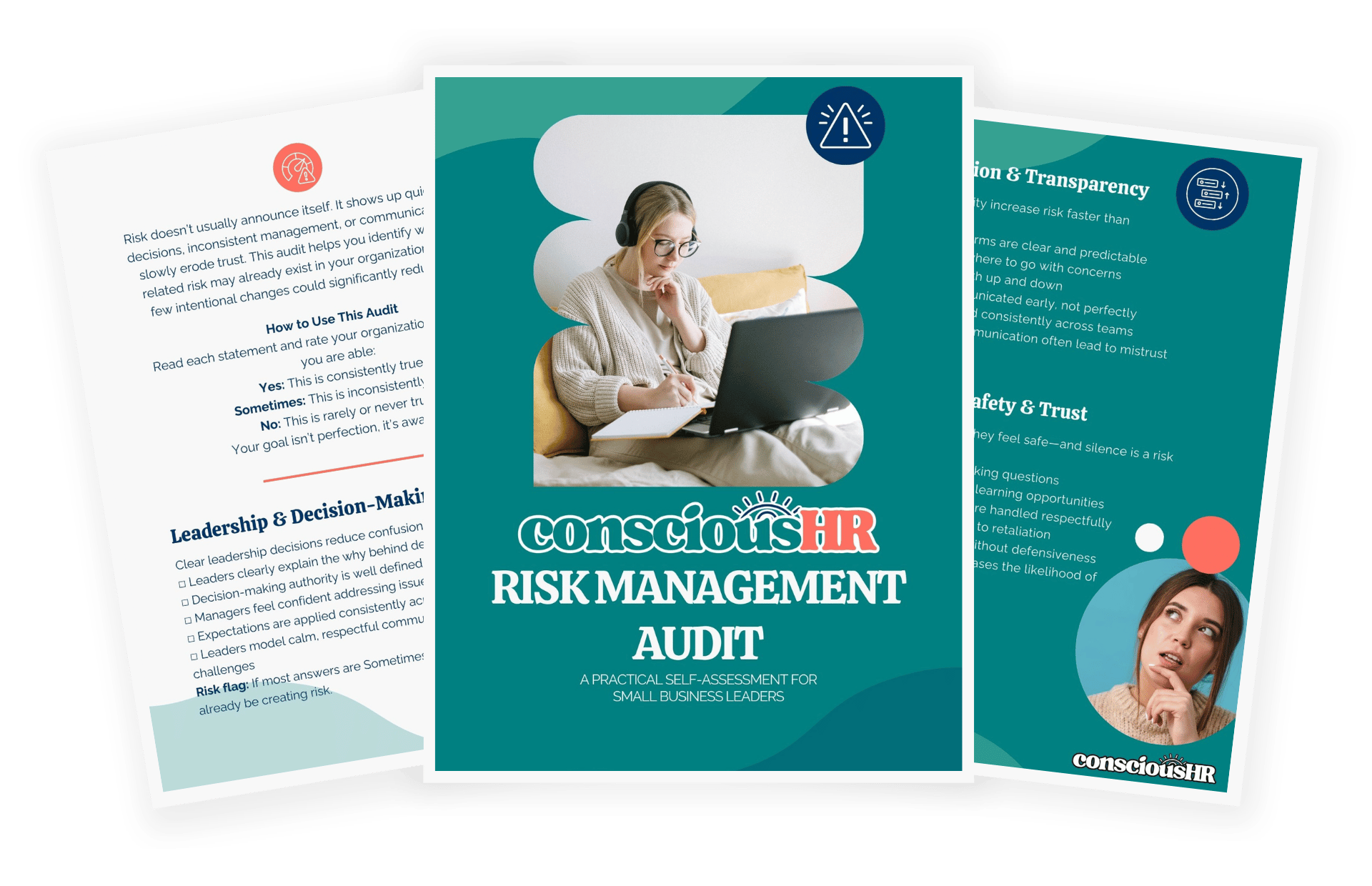
Most workplace risk doesn’t show up all at once, it builds quietly through unclear expectations, inconsistent practices, and overlooked people processes.
We created a simple, practical Risk Management Audit to help leaders and small business owners identify where people-related risk may already exist. Inside, you’ll find:
• Clear prompts to assess what’s working well and what isn’t
• Insight into where expectations, documentation, or communication may be unclear
• Common risk areas tied to leadership, policy, and day-to-day decision-making
• Reflection questions that highlight where small, intentional changes can have an outsized impact
👉 Download the Conscious HR Risk Management Audit
Use it to build clarity, reduce avoidable risk, and create more confident, consistent leadership—before issues escalate.